Are eco-friendly products actually better?
When people hear “eco-friendly cleaning,” they usually think one of two things: “That’s safer for my home” Or… “That probably doesn’t work as well” The truth is—both of those assumptions can be wrong depending on how it’s done. Let’s break it down.
Ericka Houchin
4/26/20264 min read
Eco-friendly cleaning isn’t just about using products labeled “green.”
It means choosing products that:
Reduce harsh chemical exposure in your home
Are safer for kids and pets
Limit unnecessary toxins in the air and on surfaces
Are used intentionally—not excessively
But here’s the catch…
Just because something is labeled “natural” doesn’t automatically make it effective.
Myth: Eco-Friendly means less powerful
This is a misconception that is all too common. Often, people assume that the harsh and toxic chemicals sold in stores are the best at tackling germs. While these chemicals may be effective in reducing germs, the research shows that they are not the best choice for households to use. There has been links to skin irritation and respiratory problems caused by these products, especially when used improperly.
How many times have you sprayed down your counter and wiped it down with paper towels? If you are not properly trained in how to clean, this can seem like a natural order to clean. When using the chemicals sold on the shelves in the store especially, it is imperative to take an additional step to the spray and wipe technique: rinse. The lack of rinsing will leave chemical residue on all the surfaces that you cleaned. Not only does this leave behind the toxins in your products, it also leaves a film that new dust will settle onto, which creates the buildup that professional cleaners are tasked with removing down the line.
Let’s start with the residue. The cleaning agents not marked as eco-friendly are full of something known as VOCs. What are they? VOCs stand for volatile organic compounds, which are carbon-based chemicals that contribute to air pollution. They are commonly found in cleaning products, disinfectants, and air fresheners. They also are a big contributor of short-term and long-term health problems.
Now let’s talk about how the lack of rinsing is actually making your home more dirty in the long run. A major issue with this pattern is the fact that you are not actually removing the bacteria in the first place, you are just moving it around. Having the toxic chemicals may be beneficial in this case, because they are marketed as effective killers of germs and bacteria. However, leaving behind this film of residue is going to be a magnet for dirt and future grime, making your home more dirty more quickly.
Here is where eco-friendly cleaners are going to win, especially when used by a well-trained professional. There are plenty of natural ways to disinfect surfaces. The natural products will be used sparingly, and due to the fact that these products are naturally less effective as dissolving the buildup, there will be more scrubbing and more rinsing. This will eliminate the left behind residue and it will eliminate the risk of breathing in more air pollution than when you started.
Natural Substitutions
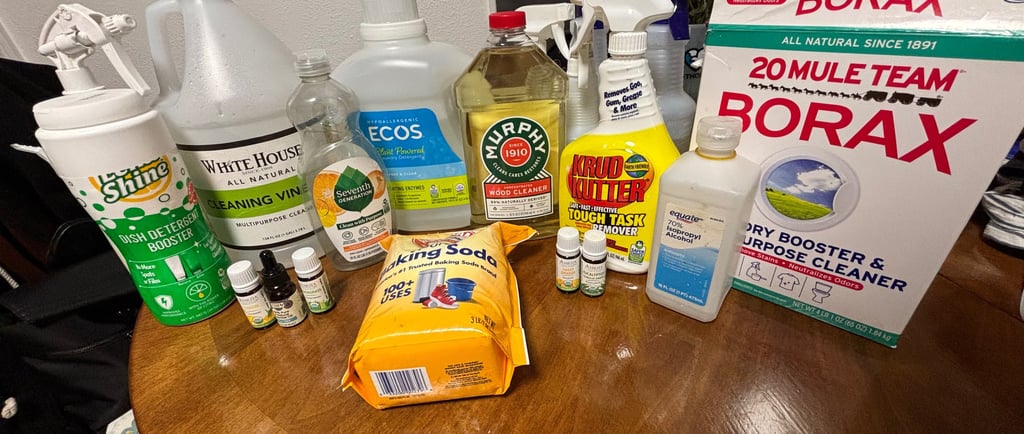
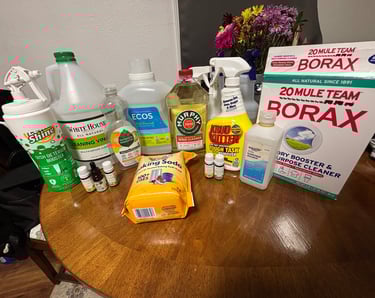
So, let’s talk about what these natural substitutions are. There are products that are made and sold in stores that are certified as being natural and eco-friendly. Some examples include simple green, ecos products, seventh generation, Murphys, and many more. The ones I listed are some of my personal favorites that I often keep on hand.
In addition to these solutions, I also carry some mixtures that are made from everyday ingredients. One example for an all natural stain fighting agent is a mixture of baking soda and hydrogen peroxide. The combination creates a fixing action that is great for lifting stains and killing mold! It can be used for a ton of cleaning needs! Baking soda is also a good option to use as a deodorizer. Hydrogen peroxide is the best non-toxic alternative to bleach. Used together, they make a dynamic duo that is free from any VOCs.
Another great natural solution is vinegar. Beware that vinegar can not be mixed with many things though. Vinegar and water is going to be the best go to, and never use it after or combined with any other product just to be safe. If you use the hydrogen peroxide or baking soda on a surface that you want to follow with vinegar, be sure to thoroughly rinse in between. Vinegar is a good way to disinfect naturally, but can get a bad rap due to the smell. Vinegar is acidic, so keeping with the acidic factor, lemon or lemon juice is a good additive for additional cleaning power and combative for the strong smell. Another option is citric acid, though less commonly on-hand, having this in your cleaning kit is amazing specifically for hard water spots.
Vinegar, lemon, and citric acid are your acidic options. Baking soda and borax are your base options. Both have their uses within the home, but mixing them together is going to make your solutions null and void. You will turn good natural solutions into a useless liquid. Another thing to note here is that when you use these types of products, they need to be mixed fresh daily to hold their power for cleaning. Be sure to keep this in mind when mixing the solution, because if you mix more than you will be using, it will be wasted. A good rule of thumb is to mix less than necessary because you can always mix more. This is more preferred than having to throw away extra.
Final Thoughts
In conclusion, I want to reiterate that while the toxic chemicals sold in stores make the cleaning process easier at times, their use is not always worth the true cost. The natural substitutes will get the job done. Sometimes it takes extra effort, but more scrubbing is a great way to ensure that no residue is left behind to source the dreaded buildup that so many homeowners struggle with! The last thing I want to note is to know what substances go where. For example, vinegar or acidic substances do not belong on natural stone like granite counter tops. This choice will erode your beautiful and expensive counter tops over time. Remember, if you do not want to put the time into learning how and where to use products safely and effectively, and you live within 50 miles of Omaha, I am always available to take your call! I am experienced, knowledgeable, and I keep every service 100% judgement free!
Thanks for reading, and as always, I hope this helps!